
Carrier Shipping
Book carrier shipments and follow each package through delivery
Compare carrier rates, buy labels, and track packages from Microsoft Dynamics 365 and Power Platform.

Carrier management
Connect carrier shipping to the orders behind it
Manage outsourced deliveries from shipment creation through collection, tracking, and proof of delivery. Keep carrier activity connected to the business records your operations and customer service teams use.
Carriers
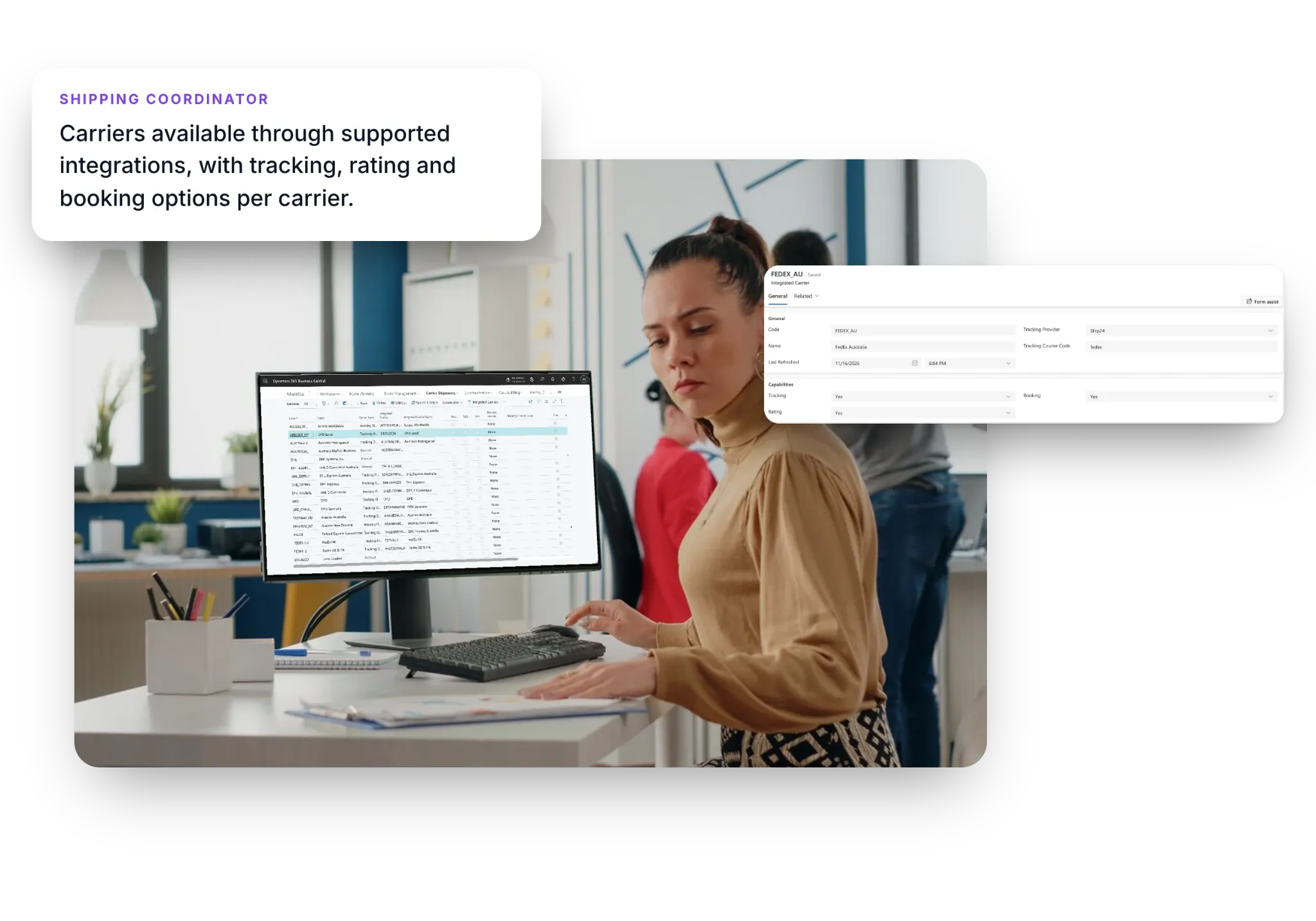
Choose how you work with each carrier
Use integrated carriers for booking, labels, and automatic tracking. Add tracking-only carriers for externally booked shipments, or manage shipments manually where a connection is unavailable.
- Connect your existing carrier accounts through supported integrations.
- Select the carrier and service for each shipment.
- Compare available rates from connected carriers before booking.
Shipment preparation
Prepare shipments from orders or spreadsheet imports
Create carrier shipments from sales orders, purchase orders, transfer orders, and service jobs. Create a shipment or add to an existing one directly from sales order lines.
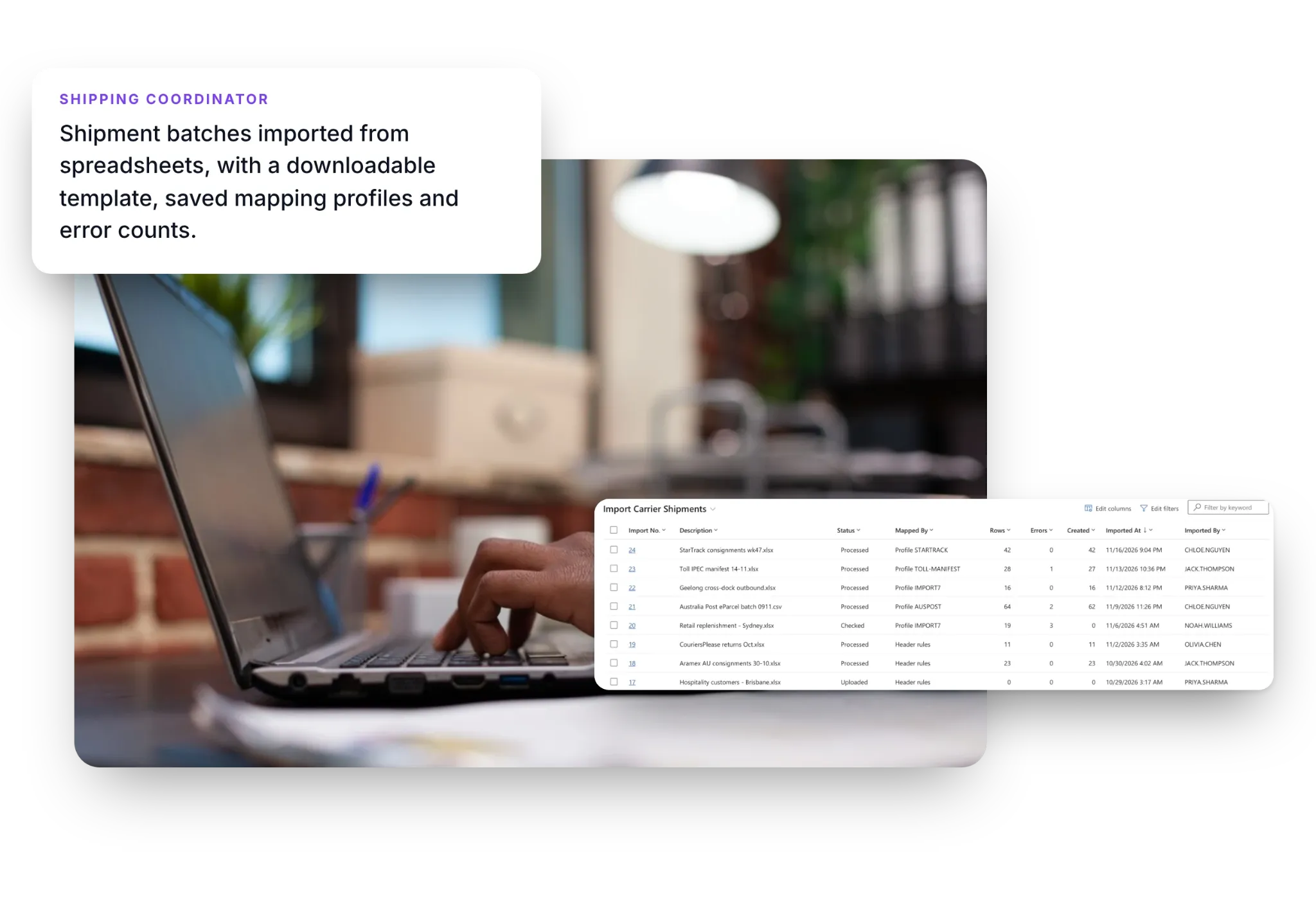
- Import shipment batches using a downloadable template.
- Map spreadsheet columns, check rows, and save mappings for reuse.
- Keep the related orders and package references with the shipment.
Booking
Book shipments and prepare collection documents
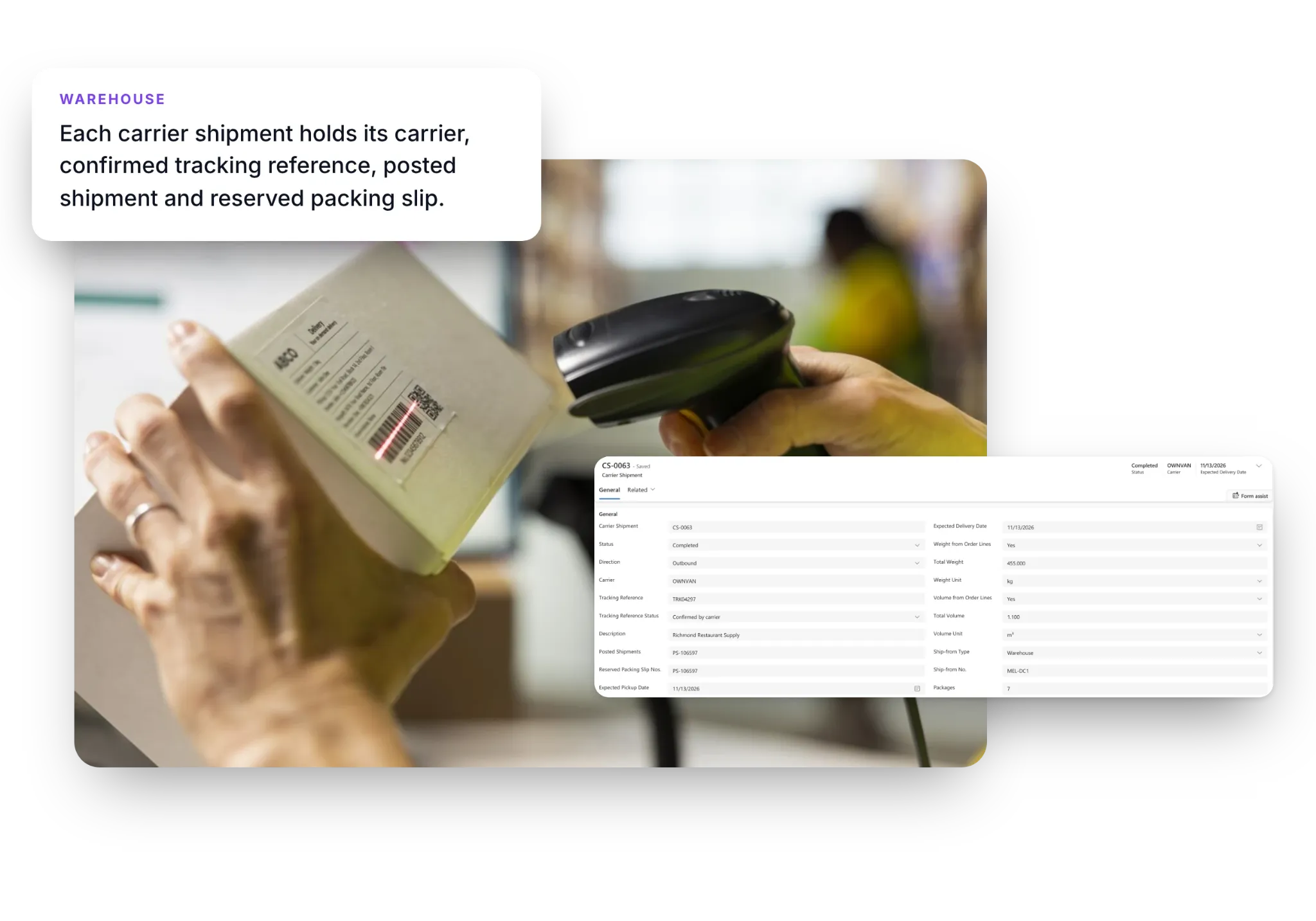
Through supported carrier integrations, create the shipment at the carrier and purchase its shipping label. Prepare the documents needed for packing and collection.
- Download labels in supported formats, including PDF, PNG, and ZPL.
- Reserve, view, and print packing slips for shipment orders.
- Create a manifest for the carrier collection through supported integrations.
See how RouteCTRL handles your carrier shipping workflow
Explore shipment booking, package tracking, and exception management with a demonstration focused on your operation.
Request a demoPackage tracking
Follow packages from collection to delivery
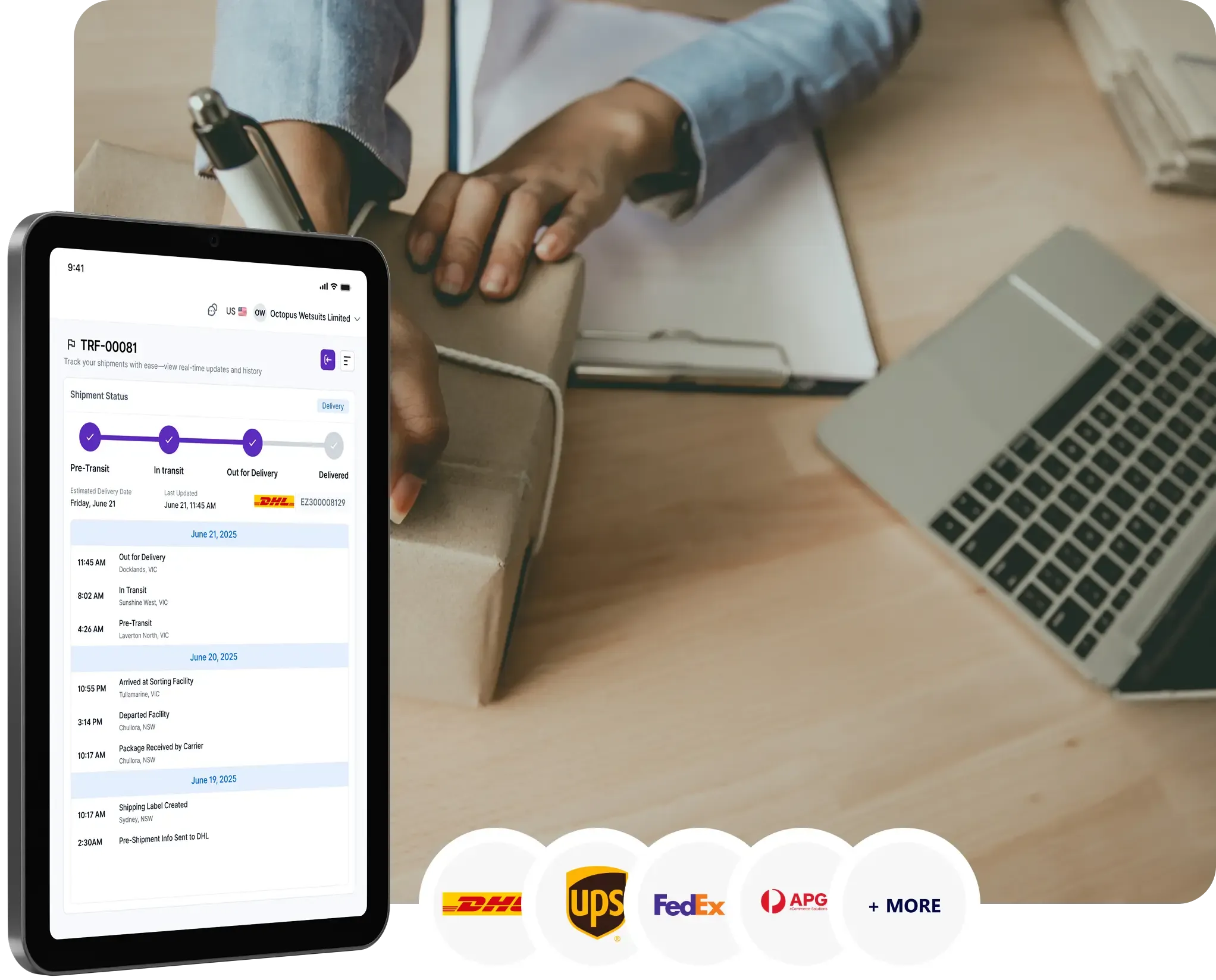
Mark shipments Ready to Ship and record collection when the carrier picks them up. Retrieve package tracking updates on a schedule or on demand where supported by the carrier connection or tracking service.
- Review picked-up, in-transit, out-for-delivery, delivered, delayed, returned, and failed-delivery events.
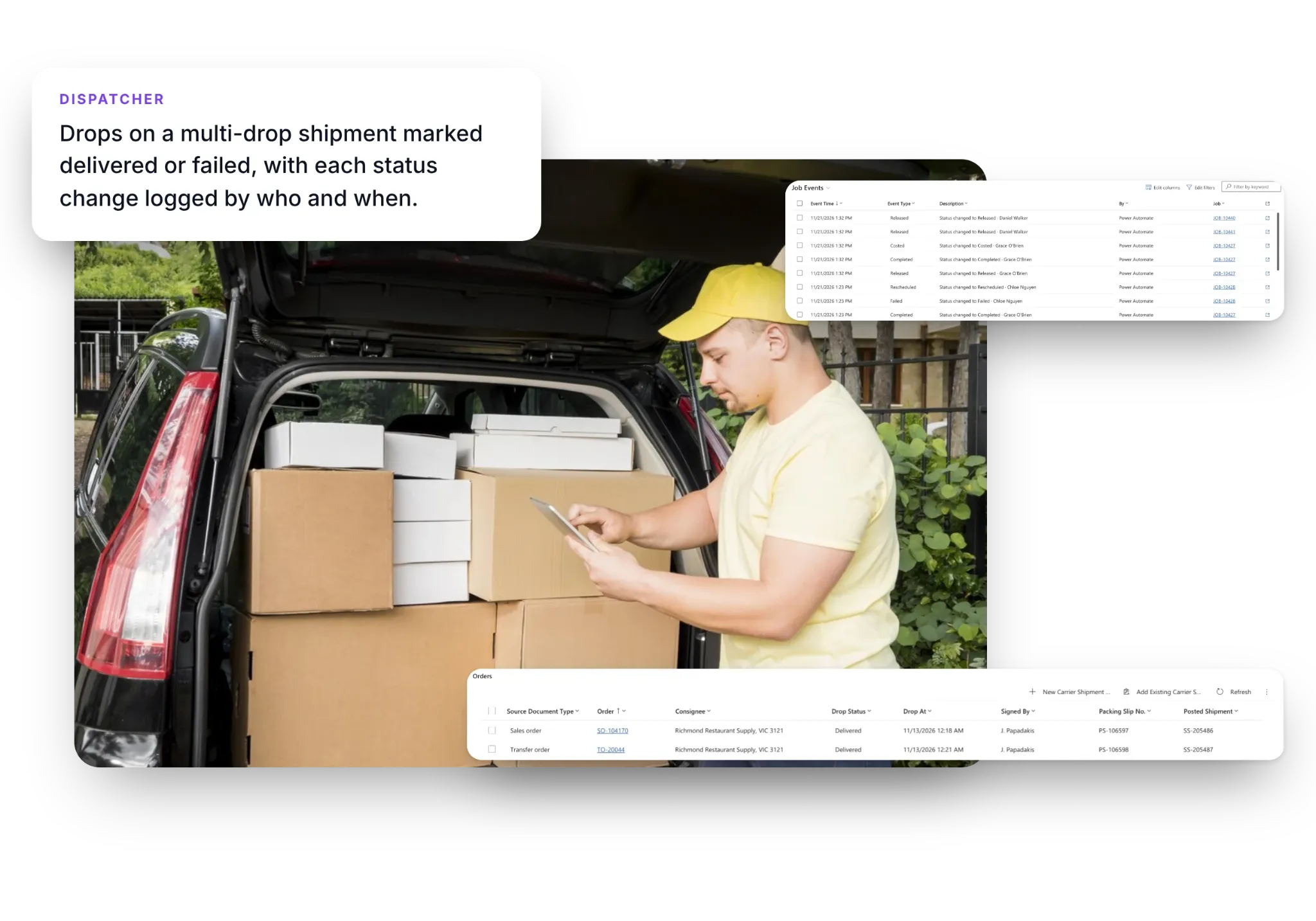
- Record delivered or failed outcomes for individual drops on multi-drop shipments.
- Review recorded status changes, edits, and notes, including who recorded them and when.
Customer Portal
Give customers shipment updates and delivery proof
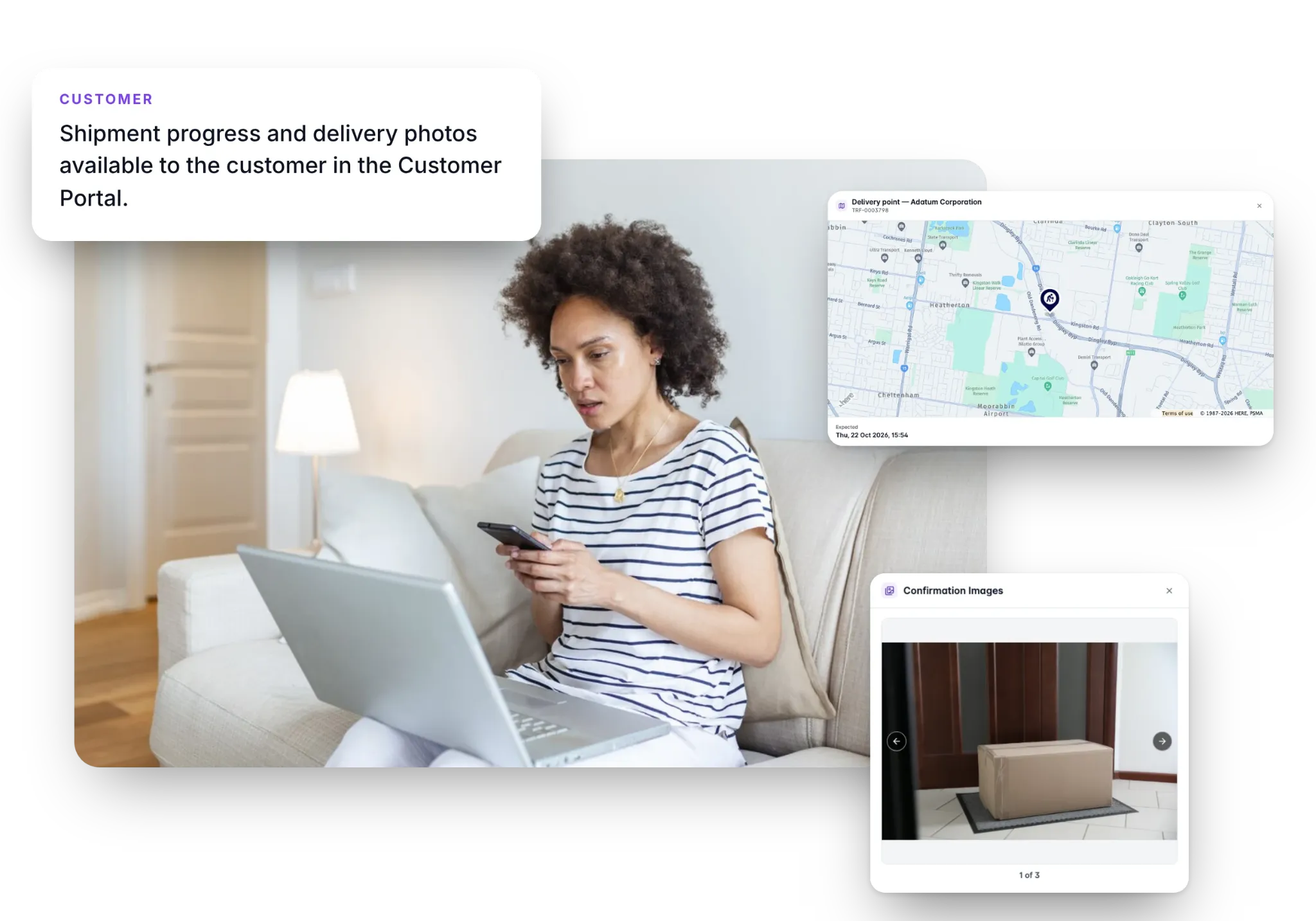
Share shipments through the Customer Portal so customers can follow delivery progress. View and download available carrier proof of delivery.
- Publish shipments automatically through the configured Customer Portal workflow.
- Give customer service access to recorded shipment progress.
- Keep available delivery evidence associated with the shipment.
Carrier performance
Identify exceptions and compare carrier performance
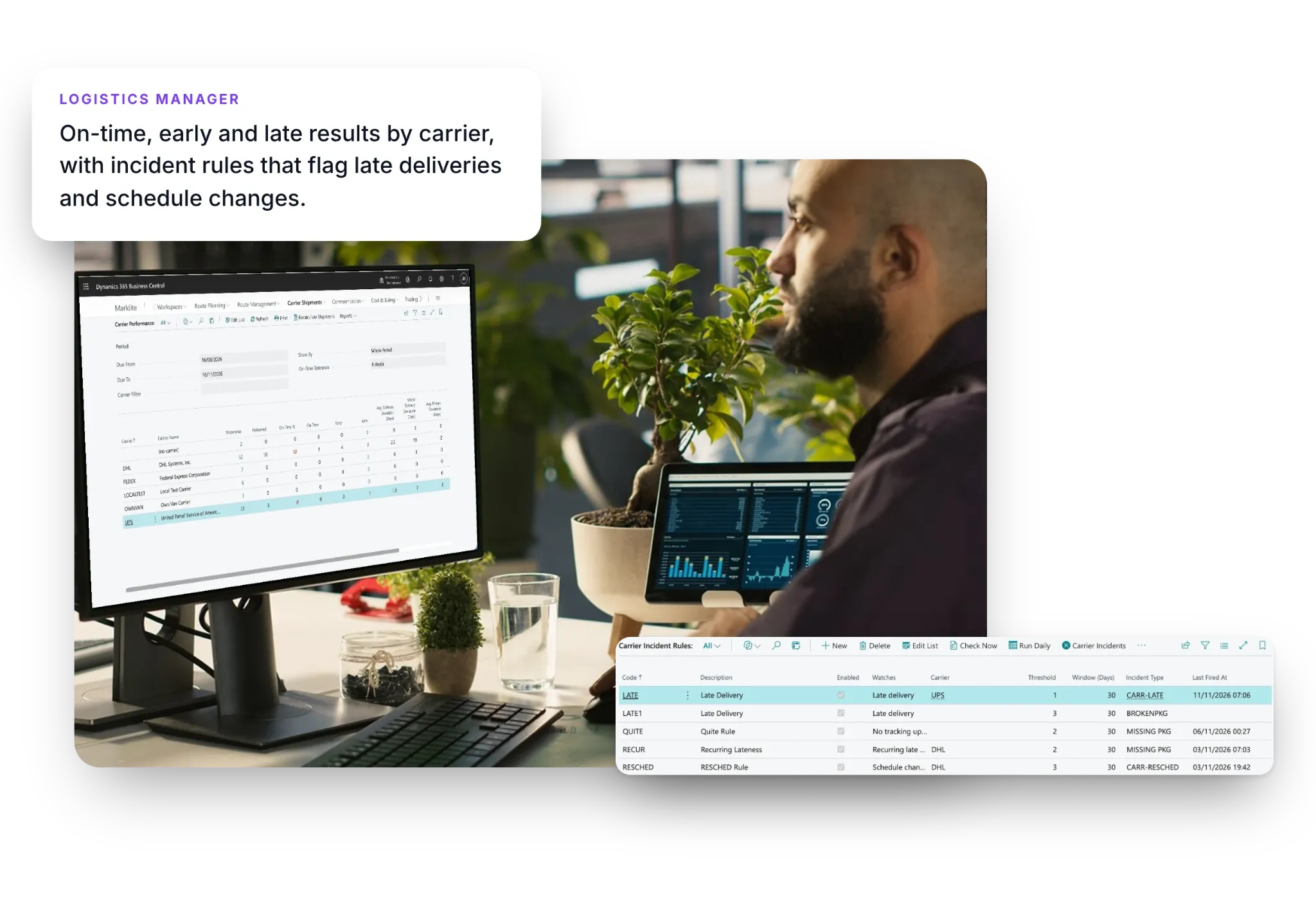
Configure incident rules for late pickups, early or late deliveries, missing tracking updates, and repeated schedule changes. Record damage, shortages, delays, or refused deliveries against the shipment.
- Monitor 30-day on-time performance, overdue shipments, rescheduled shipments, and open incidents.
- Compare early, on-time, and late results by week, month, or quarter.
- Review Carrier Performance, Carrier Incidents, and Schedule Changes reports.
Business benefits
Reduce shipping administration and act on delivery exceptions sooner
Create shipments from existing order records or import batches with saved mappings, reducing manual preparation across separate tools.
Compare available rates before booking, then assess carrier reliability using recorded delivery performance and incidents.
Use incident rules and dashboard indicators to identify overdue shipments, missing updates, and recurring delivery problems.
Give customers access to shipment progress through the Customer Portal and provide your service team with the same shipment context.
Review recorded shipment status changes, edits, and notes, including who recorded them and when.





Insights & resources
Find practical answers to transport challenges

Win a LEGO Technic McLaren P1 at Convergence 2026: Visit RouteCTRL at Booth 110
Visit RouteCTRL at Booth 110 at Convergence 2026 to enter a free prize draw for a LEGO Technic McLaren P1, Sony ULT WEAR Headphones or a JBL Clip 5 Speaker.
Read article: Win a LEGO Technic McLaren P1 at Convergence 2026: Visit RouteCTRL at Booth 110
How to Plan Deliveries Backward from the Promised Date in Dynamics 365
Compare the cost and the service impact of each delivery plan before any route is built
Read article: How to Plan Deliveries Backward from the Promised Date in Dynamics 365
When Spreadsheet Route Planning Stops Working: Signs It’s Time to Plan Inside Dynamics 365
Eight signs, how to measure each one, and what changes when routes are planned on the order records
Read article: When Spreadsheet Route Planning Stops Working: Signs It’s Time to Plan Inside Dynamics 365
How to Add Route Planning to Dynamics 365 Without Disrupting Dispatch
Set up, pilot and roll out RouteCTRL one warehouse at a time, with each team's changes agreed before go-live
Read article: How to Add Route Planning to Dynamics 365 Without Disrupting Dispatch
How to Plan Delivery and Pickup Routes from Business Central Orders
Select orders, compare route options by cost and release routes with RouteCTRL, fully integrated into Microsoft Dynamics 365 Business Central
Read article: How to Plan Delivery and Pickup Routes from Business Central Orders
Route Planning in Microsoft Dynamics 365 and Power Platform
How to plan, dispatch and track delivery, pickup and field service routes from your Microsoft records
Read article: Route Planning in Microsoft Dynamics 365 and Power Platform
RouteCTRL is Heading to Ghana for DynamicsCon Regional: Africa 2026
RouteCTRL is proud to be part of DynamicsCon Regional: Africa 2026 in Accra, where we’ll be showcasing how Dynamics 365 users can simplify transport, field service, fleet, and mobile operations with one connected execution platform.
Read article: RouteCTRL is Heading to Ghana for DynamicsCon Regional: Africa 2026
Returns Are Transport Execution Too
Returns should not become a side process after delivery fails. This article examines why return pickups need route-level control, how visibility breaks down in reverse logistics, and how Dynamics 365 users can manage returns as part of transport execution.
Read article: Returns Are Transport Execution TooFAQ
Frequently Asked Questions
Find answers about RouteCTRL’s capabilities, Microsoft platform requirements, and licensing options for your operation.
Yes. Connect your existing carrier accounts through supported integrations. Booking, rate comparison, labels, and tracking depend on the capabilities available for the selected carrier connection.
Yes. Upload a shipment spreadsheet, map its columns, check the rows, and create the shipments as a batch. Save the mapping for subsequent imports or start with the downloadable template.
Yes. Configure incident rules for early or late delivery, late pickup, missing tracking updates, repeated schedule changes, recurring late deliveries, and frequent rescheduling. Your team can also record shipment incidents manually.
Yes. Through supported carrier integrations, RouteCTRL lets you create the carrier shipment and purchase its shipping label. Tracking-only carriers are booked externally, while manual carriers can be managed without an integration.
RouteCTRL Carrier Shipping supports Microsoft Dynamics 365 Supply Chain Management, Business Central, Sales, and Microsoft Power Platform. Order records and accounting actions follow the supported workflow configured for the chosen application.
Yes. RouteCTRL supports shipment creation from sales orders, purchase orders, transfer orders, and service jobs. You can also create a shipment or add to one directly from sales order lines.
Yes. RouteCTRL supports package-level tracking, with updates retrieved on a schedule or on demand where supported by the carrier connection or tracking service. Manual carriers can be managed without automatic tracking.
Yes. RouteCTRL retrieves available quotes from connected carriers so you can compare services before booking.
Shipments can be shared through the configured Customer Portal workflow so customers can follow delivery progress. RouteCTRL also supports viewing and downloading available carrier proof of delivery. A delivered status does not by itself establish that a proof document is available.
Licensing combines operational feature licenses with additional access, resource, and service licenses where required.
A feature license applies to one Dynamics 365 Business Central company or one Supply Chain Management legal entity. Last Mile & Fleet Operations requires an initial minimum purchase of five vehicle licenses. Field Service has a separate feature license.
Licensing Last Mile & Fleet Operations, Field Service, or both includes one shared RouteCTRL office-access entitlement per environment: one Administrator, one Functional Manager, and unlimited Read-Only Users.
Additional Administrator and Functional Manager users require additional RouteCTRL licenses. Microsoft licensing remains separate.
The published price list shows monthly rates for reference. Payment is billed annually in advance for a 12-month subscription term per licensed entity.
Microsoft Dynamics 365 licensing, tracking hardware, connectivity, and third-party messaging charges are separate unless specifically included in a quotation. Implementation, customization, and professional services may also be quoted separately.
Standard implementation documentation and guidance are distinct from a RouteCTRL-managed implementation service.
Additional vehicles, operators, users, and services can be licensed as requirements change. Configuration and rollout work depend on what is being added.
Additional quantities are priced under the terms applicable when purchased. Total licensed quantities are reassessed at renewal. Reductions and other subscription changes depend on the applicable agreement.
Discuss the proposed scope with RouteCTRL before committing to licenses. Confirm minimum quantities, duration, charges, success criteria, and how the pilot would move into a production subscription. Any proposed pilot arrangement should be assessed against the published licensing terms.
The RouteCTRL team can review your operational requirements, resource quantities, user roles, and optional services. Use that deployment scope and the current price list to establish the required license mix and expected charges before purchase.